What’s your plan for increasing prices? Beef prices are at an all-time high and they don’t look to be coming down any time soon.
Restaurants can expect beef prices to keep rising | Commodities content from Nations Restaurant News.

What’s your plan for increasing prices? Beef prices are at an all-time high and they don’t look to be coming down any time soon.
Restaurants can expect beef prices to keep rising | Commodities content from Nations Restaurant News.
Here’s a story out of San Francisco about the new wave of crowd funded restaurant ventures in San Francisco. “Crowd funding” is the practice of raising money online through donations via sites like www.KickStarter.com. The websites help you promote your idea and raise money to get it off the ground.
Looking at the amount of money being successfully raised, I’m not sure if crowd funding will ever be enough to bankroll an entire restaurant buildout. It does however seem pretty viable to raise enough money for your operating capital or a down payment on a bank loan for your restaurant.
Read the original article here.

How to make sure your products will sell
Pretty confusing main title, isn’t it? I’ll bet you’re wondering exactly what I’m talking about.
Along with the other biggest mistakes restaurants owners make, offering customers what the owner thinks is good, instead of what the customer thinks is good, is a surefire way to lose money in the restaurant business.
Here’s the scenario I’ve seen a dozen times.
View original post 610 more words
Is it ever a good idea to “shame” your customers.
http://www.cbc.ca/news/business/story/2013/04/19/business-restaurant-customers-culture-war.html
This doesn’t come as a surprise to anyone who reads my blog on a regular basis, but I’m shocked (sense the sarcasm) that things aren’t going well financially for Groupon. Rather than rehash an entire article, I thought I would refer you to it to give it a read if you are in the mood for a little Groupon bashing.
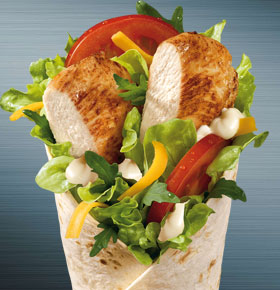
New Chicken McWrap from McDonalds
It looks as if McDonalds is making a move to try and keep up with Subway which has outpaced McDonald’s growth by a large margin in the last few year and surpassed McDonalds to become the largest restaurant chain, measured by number of stores, sometime in 2010.McDonald’s latest attempt to defend it’s position as a market leader manifests itself with a new menu item, the McWrap, that is aimed at millenials who gravitate toward higher quality, healthier menu items.
Their thought is that they want to give millenials a reason not to go somewhere else if they are trying to eat better.
Here’s my take:
The good – It’s always a good idea to consider where the market is going. Staying ahead of menu trends can help a restaurant remain a market leader. Making intelligent changes based emerging trends may also prevent the concept from getting stale and protect it from competition from newer, trendier restaurants.
The risk – Rolling out new menu items to compete with other chains can hurt the market position of a restaurant brand. A well established brand like McDonalds means particular things to people. Screwing not just with menu items, but with menu direction can adversely affect a restaurant’s ability to deliver on the preconceived notions that diners already have about a restaurant. Not delivering on your customer’s expectations will hurt any brand, even one as big as McDonalds. A great example is the Angus burger line for McDonalds. They rolled out this line to compete with the emerging high quality “quick casual” concepts that have been dominating new growth in the quick service segment the last decade. The effort has been widely seen as a failure and the Angus burgers maybe on their way out of the McDonalds menu lineup.
McDonalds needs to make sure that any new menu items take advantage of their current market position. They will never be able to rebrand themselves as a “healthy” concept. They will never be an “upscale” quick casual concept. That just isn’t why McDonald’s existing customers go there, and trying to be those things can alienate those existing customers and confuse new customers who relate to McDonalds one way through their existing customers and another way through McDonald’s own branding efforts.
The verdict – It’s up to history how the McWrap will do at McDonalds. I predict a big, fat flop. First, the McWrap is being rolled out to chase health conscious millenials who are simply never going to see McDonald’s as a healthy place to eat, despite the fact that McDonalds does in fact have healthy menu items. The Angus burgers failed to help McDonalds position itself as a quick casual or high quality option like it’s “quick casual” competitors. It was a waste of time and resources.
The advice – McDonalds would make more money realizing that what it’s customers want most is speed and consistency. People don’t expect the best hamburger from McDonalds and frozen 1/4 lb Angus patty doesn’t deliver it anyways. It’s great to try new menu items to keep your existing market demographic happy. It’s not great to sacrifice your existing market position to chase a completely different market. McDonalds should refocus on who it is most likely to come to their restaurant, trim the fat from extra menu items that don’t speak to that market, then focus on innovative ways to reach new customers that have the same sensibilities and desires as their existing market base.
Brandon O’Dell of O’Dell Restaurant Consulting offers operations and marketing consulting for restaurants and food services of all types. Visit www.bodellconsulting.com for more information and find downloadable spreadsheets and management tools in the webstore at www.bodellconsulting.com/webstore.html.

Groupon CEO fired | click for Yahoo Finance article
What happens when you sell a product or service that “kills” your customers?
Just ask recently fired Groupon CEO Andrew Mason. I don’t know that he has the answer, but I do.
Groupon was a bad idea from the start. They talk businesses into selling their goods or services for half the cost of their normal price. Of that half price that is collected, Groupon keeps half and the business keeps the last half, minus any charges for processing fees on both their cut and Groupon’s cut, which equals about 7% of the business’ portion.So let’s do the math. Groupon sells a 50% off deal to your restaurant at $20. Groupon keeps $10 for every one sold. You keep $10 minus 7%, leaving you with $9.30.
With that $9.30 collected from the customer, you have to give them $40 worth of goods or services. If you are like most restaurants, just your cost of goods on $40 eats up $10-16 (25-40%), resulting in a loss of anywhere from $.70 to $6.70 for EVERY Groupon deal sold. That’s before you calculate in additional paper products, cleaning supplies, extra staff, and lost revenue from seats that are taken away from full price customers, among other expenses.
All this turns Groupon into the single most expensive tool there is for marketing your restaurant. This a bad, bad business model. A company that promotes itself by claiming they can bring you new business ultimately ends up putting many of it’s own customers out of business, or their customers wisen up and realize Groupon is a horribly expensive way to market and they stop using the service. Either way, Groupon is cannibalizing itself and it’s customers. Groupon claims the payoff is new, regular customers for the business. The reality is that the customers are loyal to Groupon, not the business, and they follow the next deal to the next restaurant.
No business model is going to succeed long term by killing it’s customers unless it has a never ending supply of new customers. For Groupon, that means it’s hey day in the US is over. It has run it’s course here and most businesses are too smart to fall prey to it’s predatory business practices. Groupon will not rebound from it’s current woes in this market. It’s only hope is to expand into untapped markets where business owners are not aware of the dangerous effects of using Groupon. Groupon is the first daily deal model to fall because it was the first in the market. It will not be the last however.
Ultimately, nobody wins with Groupon, except the people who buy the Groupons. Check out the linked article from Yahoo Finance about the firing of Groupon CEO, Andrew Mason. If you own Groupon stock, I’m sorry for your loss, but cut your losses and dump it now. It’s not coming back.
Brandon O’Dell is an independent restaurant consultant and owner of O’Dell Restaurant Consulting, a restaurant consulting company that offers operations and marketing consulting for independent restaurants and small chains. Learn more at their website or visit their webstore to find Excel speadsheets and Word templates to help you build a better restaurant business.
A recent story from my area of the country brings up an important question that will inevitably come up many more times. What should a restaurant owner do if an employee posts a customer’s receipt online? Does it make any difference that the receipt has something rude written on it?
Here is a link to the original story I’m referencing on the Consumerist. In short, the media is reporting that a church pastor stiffed a waitress because they didn’t like the 18% auto-gratuity on their check, the waitress posted the receipt online and then was fired by Applebees. One media outlet, the Huffington Post, is circulating a petition to get the server her job back.
Here is the USA Today version:
There are some major mistakes in most, if not all the news stories I’ve seen about this situation other than the original. Since the Consumerist’s original story had the facts right, it begs the question of intent of the other media outlets in misstating them. Here are the important facts being left out:
I’m not posting this information to defend the pastor in any way. The pastor wrote “I give God 10%, why do you get 18%?” on the check. Even if she intended it for the restaurant and not the waitress, this sort of activity by a customer is inexcusable. The restaurant should “fire” the pastor as a customer for leaving such a comment on the tab in my opinion, or at a minimum give them a warning, and the church should fire the pastor for disgracing the church as its primary representative in the public. Using God as an excuse to make a negative statement about tipping an individual person is never okay, even if she did leave the server a 17% cash tip.
The real question being raised here is, “Should the server who posted the receipt be fired?”
My opinion is that yes, the employee was rightfully fired by the Applebees where she worked. Customer receipts are private property of both the customer and the business, not the server. As such, the server has no right to post that information online, regardless of what was written on it. Had the server only shared what was written on the receipt, without posting a picture of the receipt, I might have a different opinion. It’s possible there might even be some sort of criminal law broken by the server. The server’s defense is that there is nothing in the employee manual forbidding her from copying and posting receipts online.
I’d like to get the input of restaurant owners and managers out there that could face the same situation in the future. What do you think is the right thing to do as a restaurant owner?
One piece of advice I do have to offer restaurant owners on this type of incident is that you should have a policy in your manual forbidding employees from posting pictures of guests, their personal property, or the property of the restaurant online. I also believe it would be good to expressly allow the posting of food and drink pictures online for the purpose of promoting the restaurant.
Brandon O’Dell with O’Dell Restaurant Consulting is an independent restaurant consultant who offers operations and concept strategy consulting for independent restaurants and small chains. You can learn more about their services at www.bodellconsulting.com.
Here’s a good article I found on social media marketing trends for 2013. Social media marketing can be a very cost effective way for restaurants and other food services to drive traffic. With the cost being so inexpensive, I think it is very important that tools like Facebook, Twitter, Pinterest and blogs be used to drive traffic to your main website and even directly into your operation.
Here’s the article link…
http://restaurant-hospitality.com/blog/keep-your-eye-these-emerging-social-media-trends
 O'Dell Restaurant Consulting's Blog